9 April 2026
Market Update: Gherkins
The 2026 European gherkin crop is starting from a relatively stable base,...
The 2026 European gherkin crop is starting from a relatively stable base, with planting contracts understood to be broadly in line with last year and growing conditions so far described as moderate. This should support a similar raw material position to 2025, although early-season weather volatility remains an important watchpoint. Sharp swings in temperature during January, February and March underline the sensitivity of the crop to cold snaps, heat stress and rainfall patterns during the growing season.
At this stage, contracted growing area appears broadly unchanged year on year, which suggests no major expansion in raw material availability. Market sentiment is that a better harvest than 2025 is achievable, but that will depend heavily on stable weather through the growing period. Gherkins remain a weather-sensitive crop, and any combination of cold interruptions, excessive heat or insufficient rainfall could still affect yields and quality.
Labour remains one of the most important cost drivers in gherkin production, given the high level of manual harvesting and handling required. In Germany, the minimum wage is €13.90/hour in 2026, up from €12.82/hour in 2025, with forecasts of €14.60/hour in 2027. That points to a continued upward labour cost trend across key growing regions, particularly where producers rely on seasonal and foreign workers to secure sufficient harvest labour.
Alongside labour, energy and packaging remain key areas of cost risk. Ongoing geopolitical tensions continue to keep fuel and freight markets sensitive, while disruption to Red Sea navigation and wider concern around key maritime chokepoints have added to logistics uncertainty. UNCTAD says Red Sea shipping disruption is continuing and expects the effects to run through 2026, while the IEA notes that Middle East chokepoints remain critical for global oil and energy flows. For gherkin processors, this matters because pasteurisation, machinery use, fuel and transport all remain exposed to higher input-cost volatility, and plastic packaging is particularly sensitive to oil-linked cost moves.
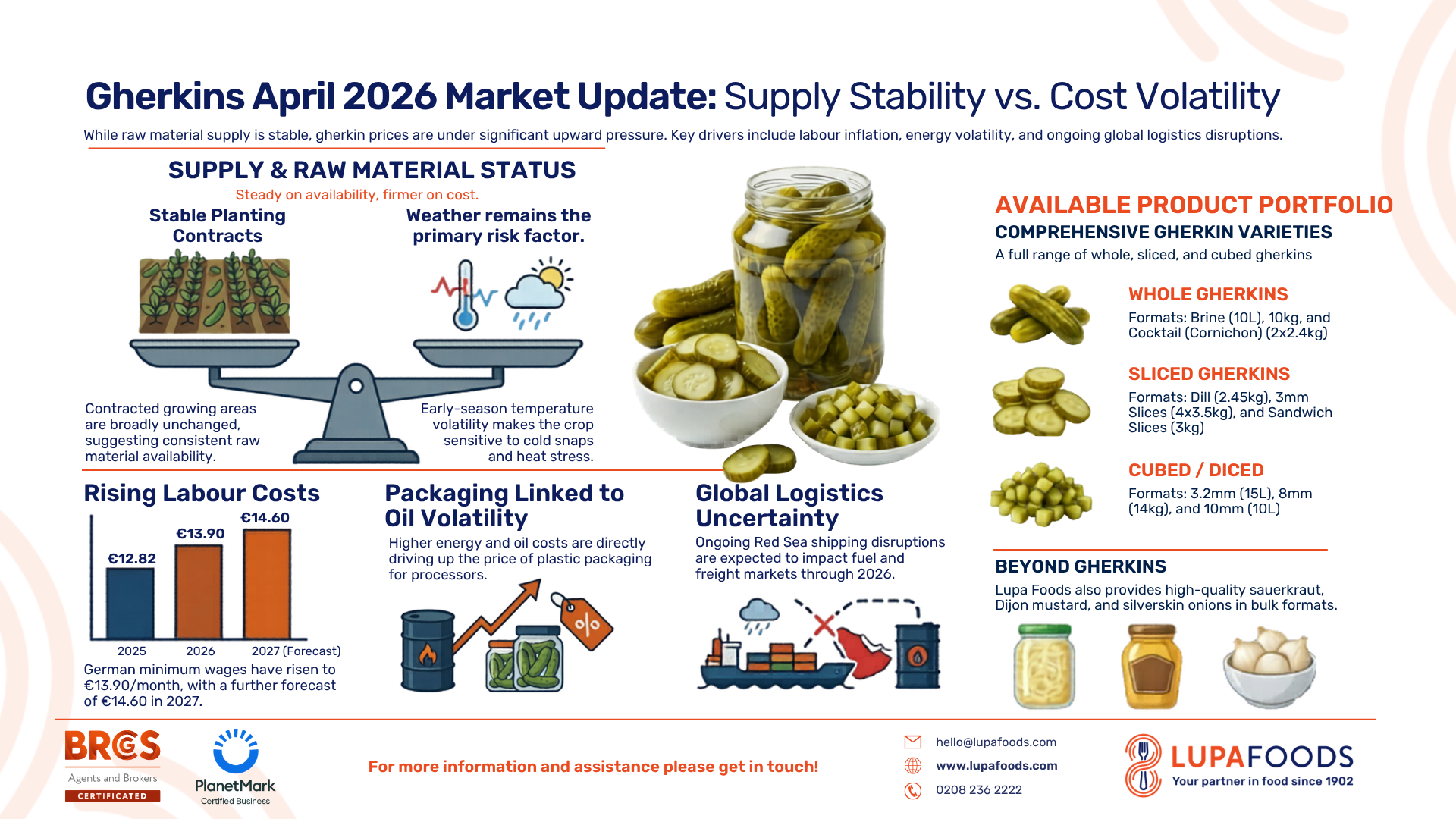
At present, the market does not suggest any major change in underlying supply versus last year, but neither does it point to meaningful cost relief. Raw material inputs such as growing area and seed appear broadly stable, yet higher labour costs, energy uncertainty and packaging inflation continue to create upward pressure on finished costs. In short, the market feels steady on availability, but firmer on cost.
The current outlook for European gherkins is one of stable supply potential, but rising cost exposure. If weather conditions remain supportive, the 2026 crop could perform better than last year. However, labour inflation, energy volatility, packaging pressure and logistics risk all remain important pricing factors in an extremely volatile global market.
The market does not currently point to a major shortage in raw material, but ongoing cost inflation means pricing downside appears limited. For buyers with second-half requirements, there is a good case for discussing cover early, particularly where exposure to labour-heavy production and packaging costs is significant.