27 May 2026
Supplier Showcase: Italian Tomato Processing with Steriltom & Italtom
Lupa Foods is thrilled to showcase our partnership with Steriltom and Italtom,...
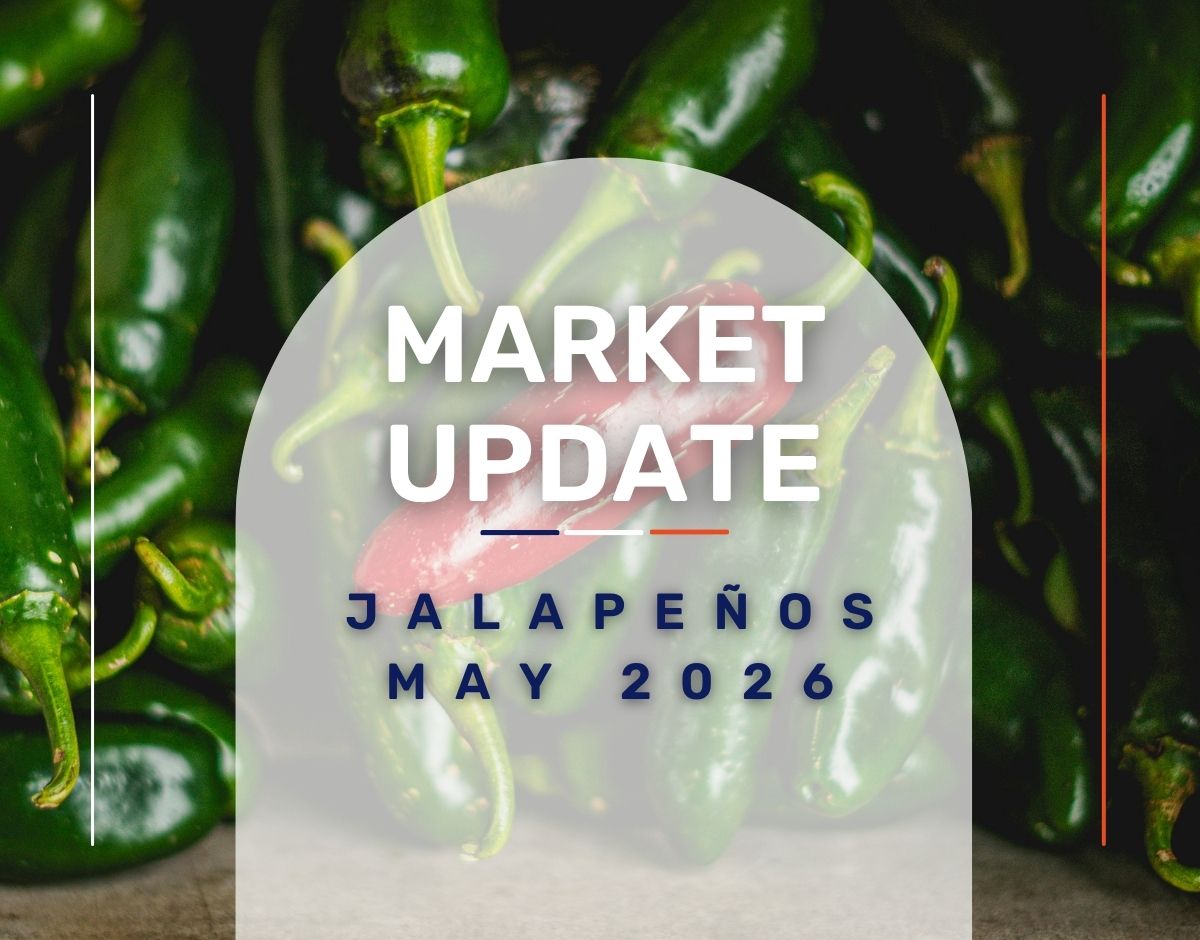
Mexico’s jalapeño market continues to face a challenging season as ongoing drought conditions and increasingly unpredictable weather patterns impact key growing regions. Producers across Mexico, as well as California, another important growing area, are continuing to deal with reduced water availability, late frosts, periods of extreme heat, and inconsistent rainfall.
These conditions are creating significant stress on crops, resulting in smaller plants, fewer peppers per plant, reduced yields, and more variability in both timing and quality. In addition to the weather-related pressures, several growing regions have also experienced increased pest and disease activity, further impacting crop consistency. As production challenges continue and costs remain elevated, some farmers are beginning to move away from jalapeños in favour of less problematic crops, adding further pressure to future supply availability.
The wider chilli market is also seeing tightening conditions as winter crops have finished earlier than expected, creating a temporary gap before summer crops fully come online. Products such as jalapeños, padrón peppers, and habaneros are currently experiencing particularly limited availability, with quality across remaining stock becoming more variable and increased volumes of Class 2 material entering the market.
As a result, prices remain firm across the category. Despite the ongoing challenges, suppliers have worked hard to maintain pricing stability where possible, and the market has seen very little deflation for a considerable period due to continued pressure on supply and production costs.
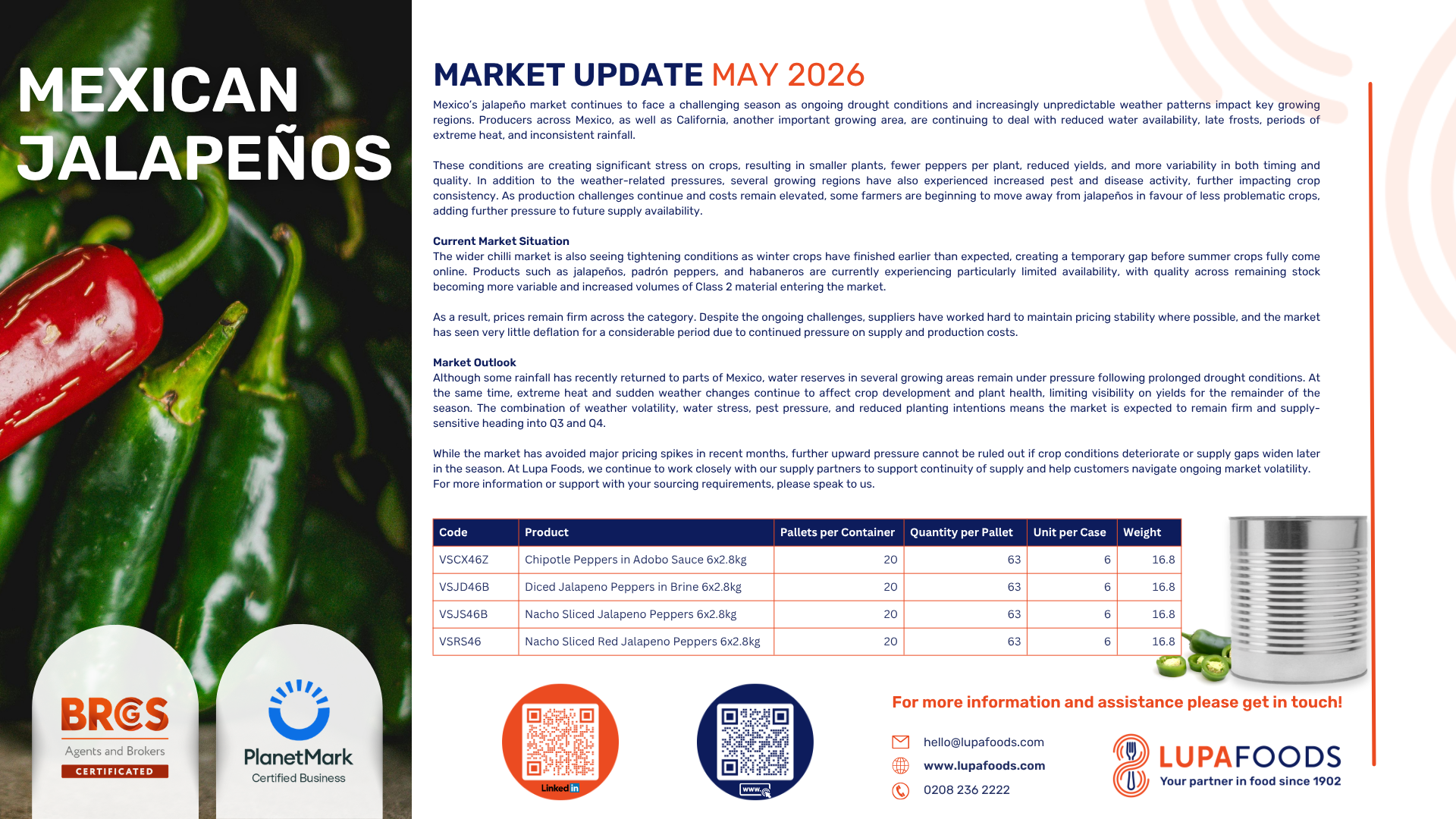
Although some rainfall has recently returned to parts of Mexico, water reserves in several growing areas remain under pressure following prolonged drought conditions. At the same time, extreme heat and sudden weather changes continue to affect crop development and plant health, limiting visibility on yields for the remainder of the season. The combination of weather volatility, water stress, pest pressure, and reduced planting intentions means the market is expected to remain firm and supply-sensitive heading into Q3 and Q4.
While the market has avoided major pricing spikes in recent months, further upward pressure cannot be ruled out if crop conditions deteriorate or supply gaps widen later in the season. At Lupa Foods, we continue to work closely with our supply partners to support continuity of supply and help customers navigate ongoing market volatility.
For more information or support with your sourcing requirements, please speak to us.